Field guide
Where mice get in.
Brick, block, stucco and sound siding already keep mice out. The weak spots are where things meet: rooflines, pipes, wires, doors and seams. Here are the 10 we find on most houses, and how to close each one for good.
All 9, highlighted
- Garage door corners and bottom sealThe bottom corners of a garage door are where the seal wears, bends or stops short. If you can see daylight there, a mouse can get in.How to fix it
- Foundation and sill lineThe joint where the wood sill sits on the foundation is one of the most common ways in, especially at inside and outside corners. On a brick house, weep holes need covering too.How to fix it
- Where building materials meetBrick, block, stucco and sound siding already keep mice out. The weak spots are the seams where two materials meet.How to fix it
- Bulkhead and cellar doorsThe angled metal door over the basement stairs rarely closes tight, at its edges or where the frame meets the foundation.How to fix it
- Low decksA deck that sits too low to crawl under hides the sill and foundation behind it, right where mice run.How to fix it
- Utility penetrationsEvery line that comes into the house, from power and gas to cable and phone, makes a hole. Those holes are rarely sealed well.How to fix it
- Pipes and AC line setsWhere the AC lines run through the wall, the hole is almost always bigger than the lines. A gap about the width of your finger is enough for a mouse.How to fix it
- Porches and stoopsIf you can see light under a door, a mouse can see the way in.How to fix it
- Roof returnsA roof return is the small boxed end of an eave, where a lower roof runs into a wall or a dormer's eave ends on the main roof. It's often hollow inside, and it can open straight into the eaves.How to fix it
- Roofline, soffit and fasciaMice are climbers. The roof edge is out of sight from the ground, and a small opening up there leads straight into the attic.How to fix it
3D · About a minute each
Take a 3D tour
The same spots, in 3D. Pick your home type and the tour stops at each one. All tours, with share links →
Real houses
Real gaps, marked
These are the same entry points on real houses. The highlighter shows where a mouse would get in.
 Before
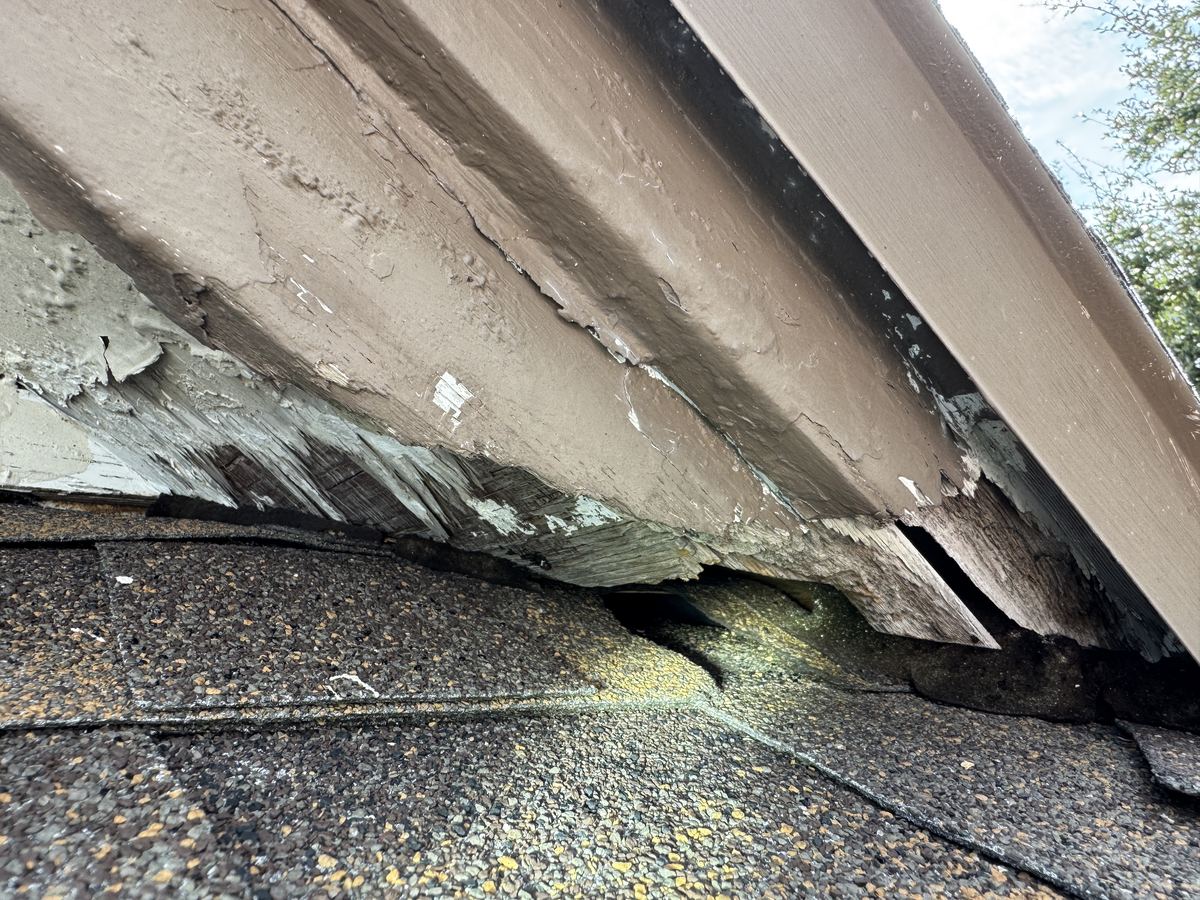
Roof return: a gnawed opening where the trim meets the shingles. Out of sight from the ground, and wide open.How to fix it: Roof return 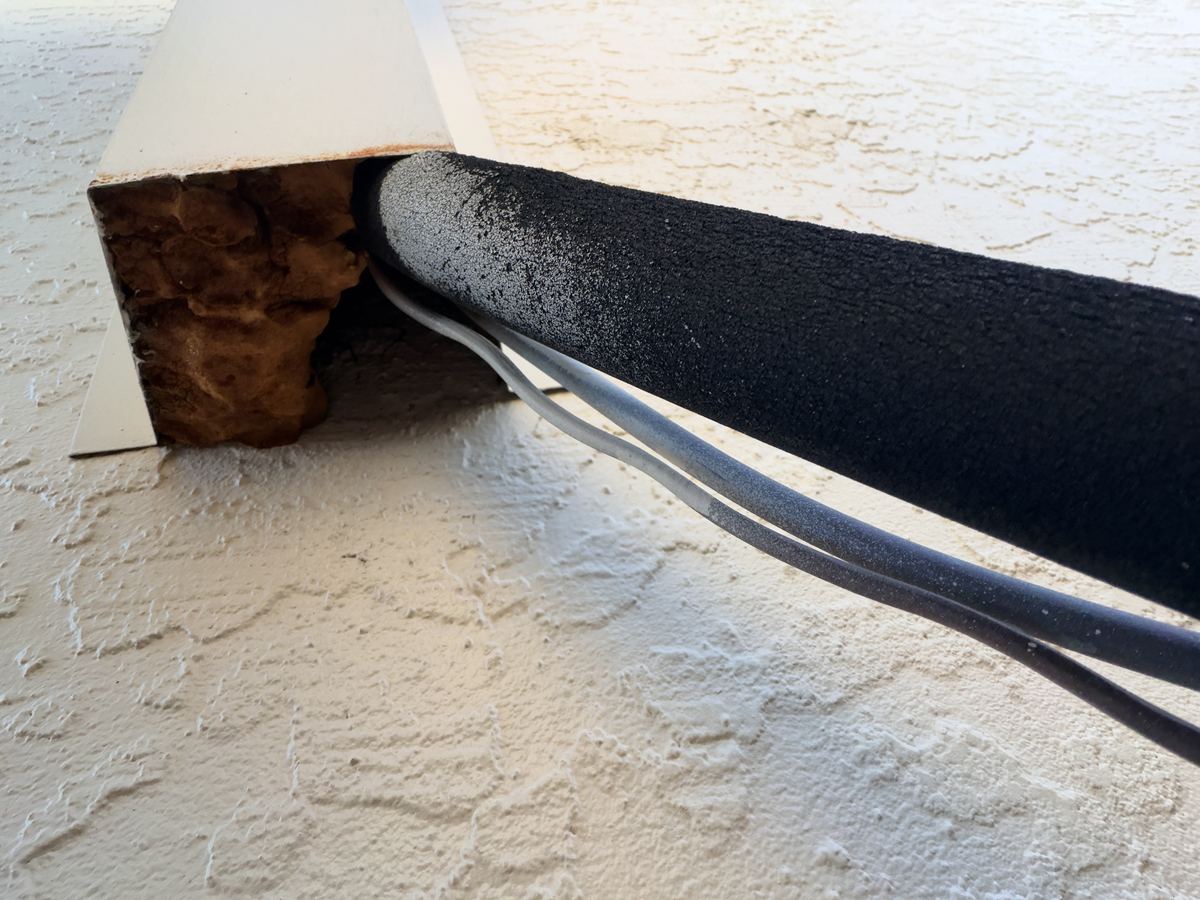 Before
AC line set: the cover was packed with foam. It has crumbled away, and the gap around the lines is open.How to fix it: AC line set 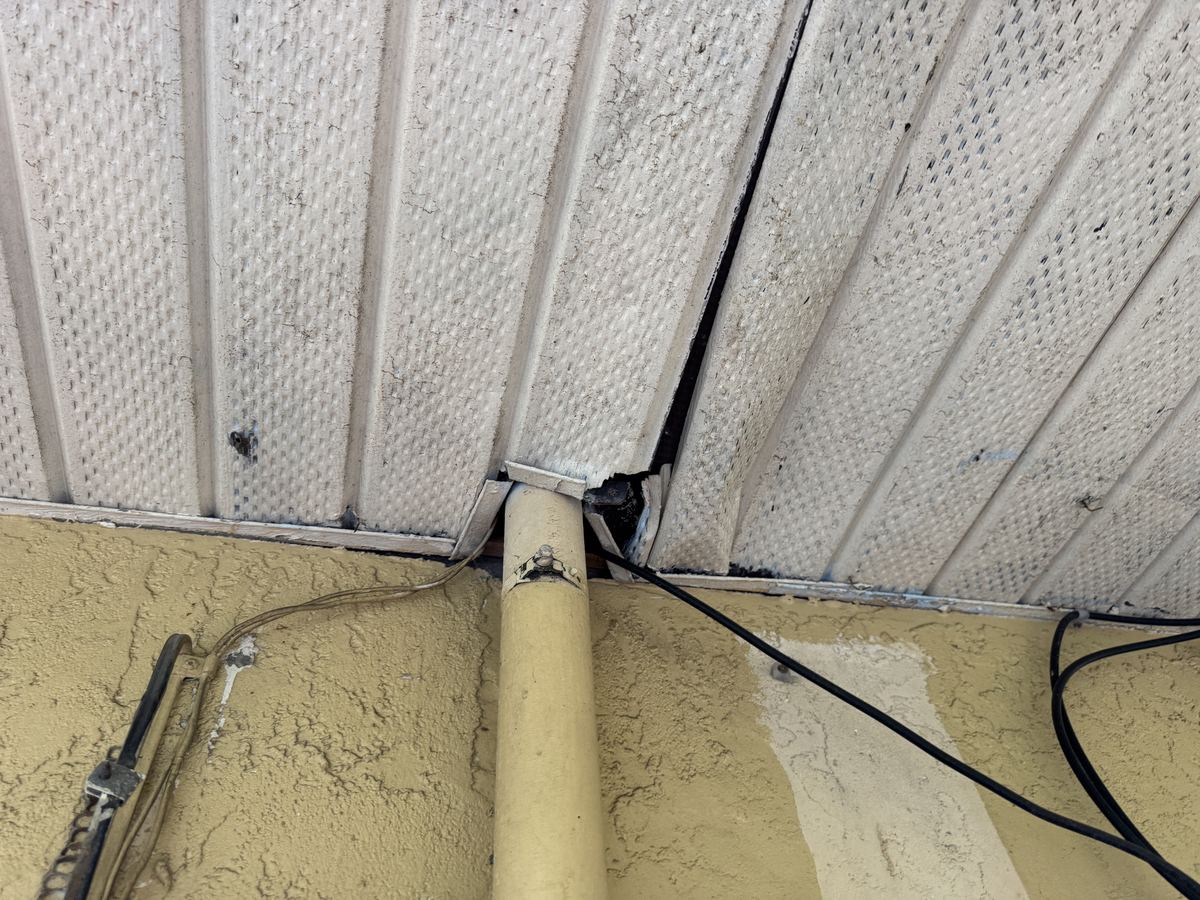 Before
Utility lines: where a pipe runs up into the soffit, the panel has broken away and left an open hole.How to fix it: Utility lines 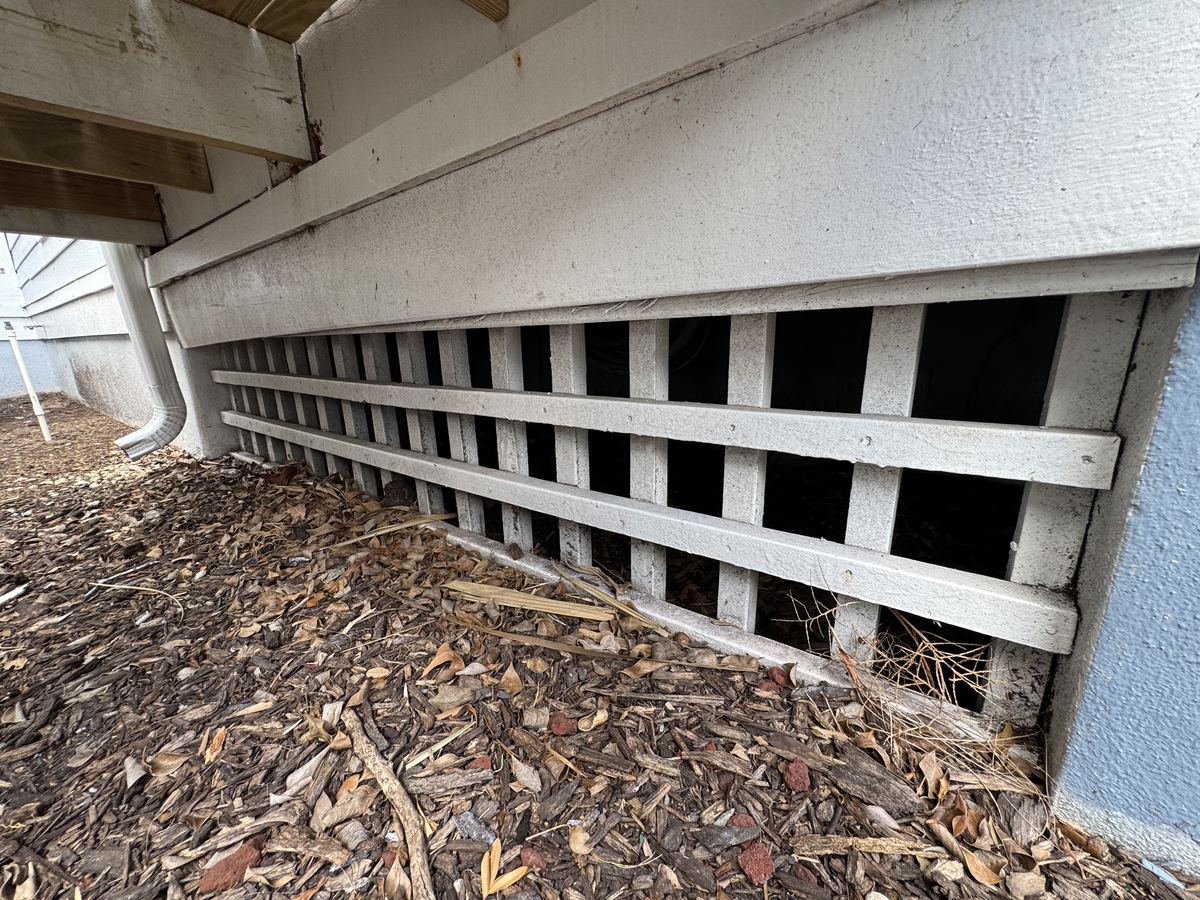 Before
Foundation line: lattice skirting looks closed from the yard, but every opening leads straight into the crawlspace.How to fix it: Foundation & sill 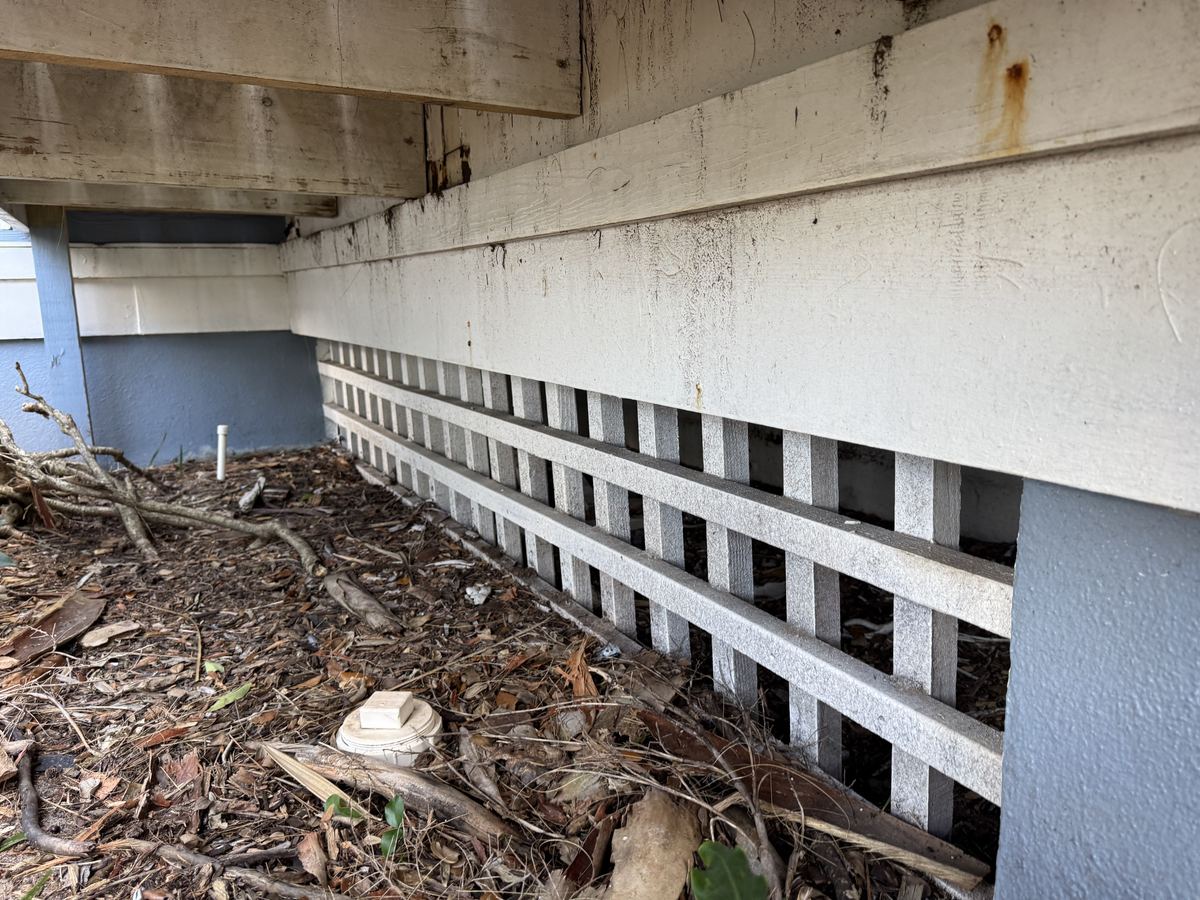 Before
Foundation line: gaps between the lattice slats run the whole length of the house.How to fix it: Foundation & sill 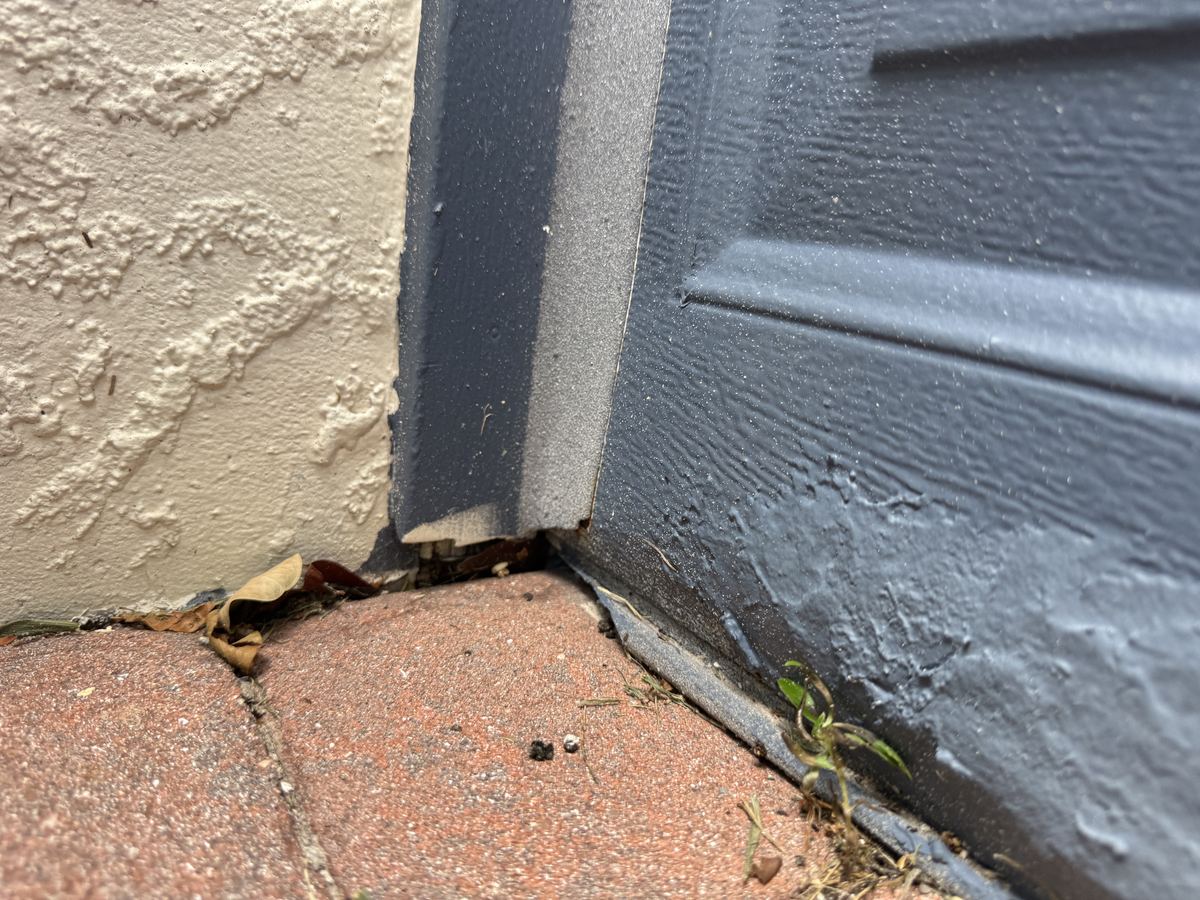 Before
Garage door corner: the bottom seal stops short of the jamb. If you can see daylight there, a mouse can get in.How to fix it: Garage door 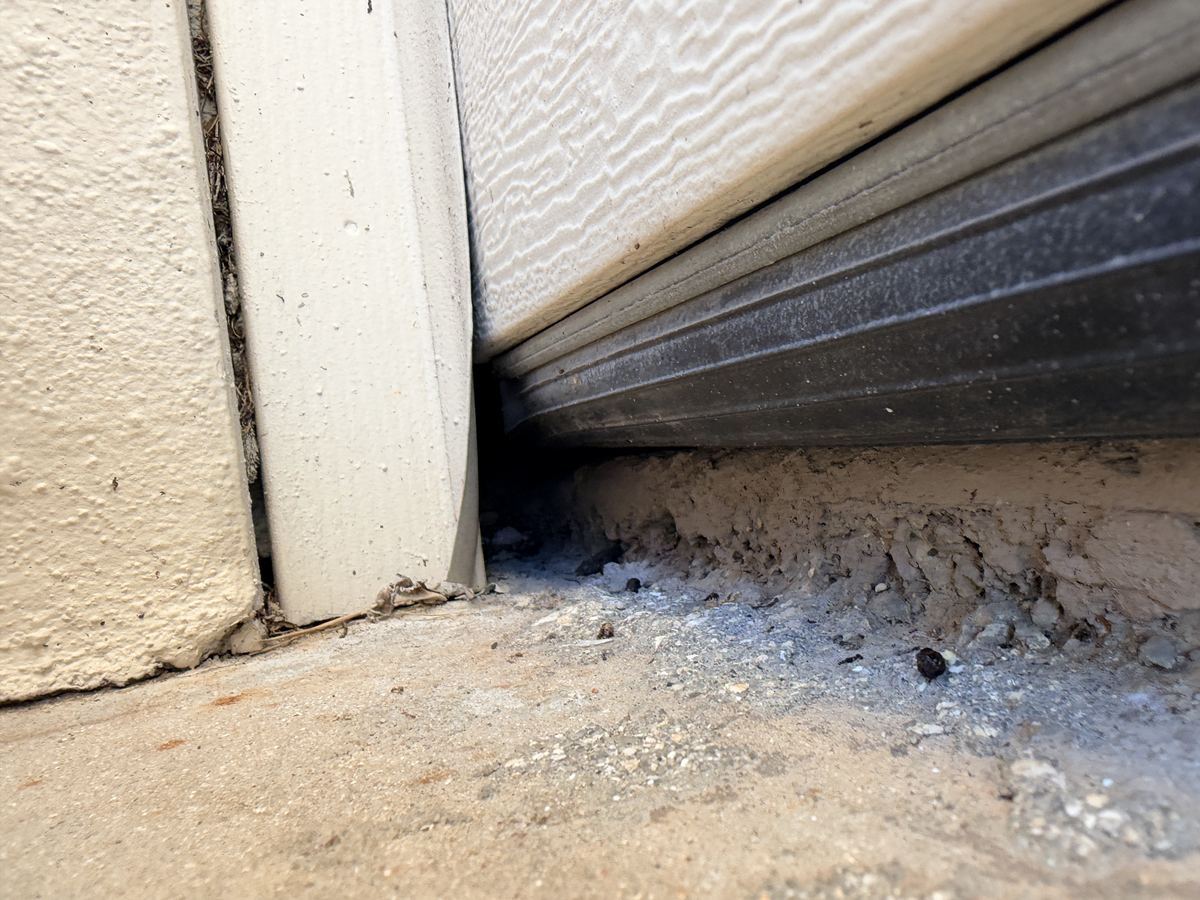 Before
Garage door corner: droppings collected right where the bottom seal stops short. That gap is the way in.How to fix it: Garage door 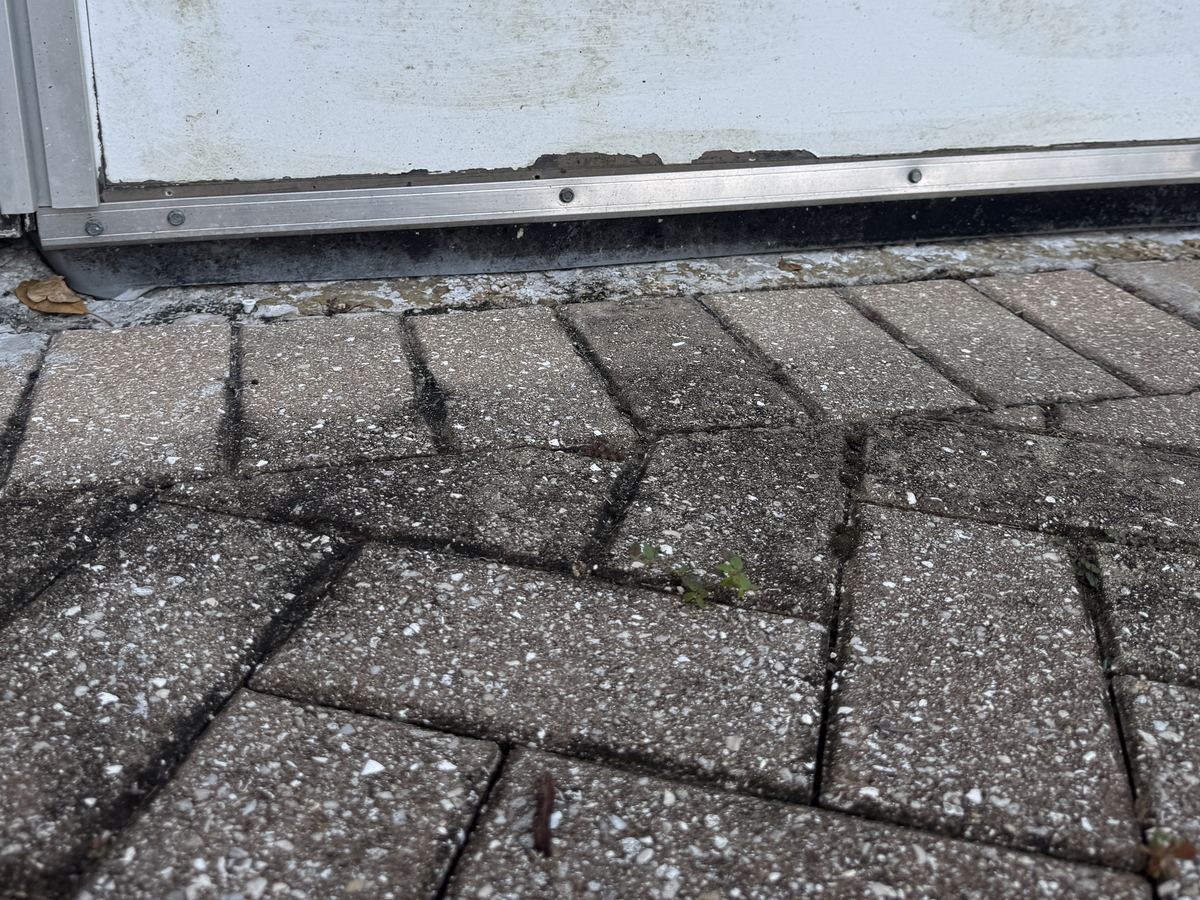 Before
Door sweep: the bottom seal is worn down and there is a gap under the door. If light shows through, a mouse can too.How to fix it: Door sweep
Before photos from real homes we've inspected, with the entry point marked in highlighter. Cropped so nothing identifies the house.
What a lasting fix is made of
Every guide comes back to the same idea: close the gap with something a mouse can't chew, and seal it in so there's no edge to grip.
- 1/4-inch hardware cloth (stainless or heavy galvanized), or exterior-grade metal.
- Sealed in with exterior-grade sealants or adhesives.
- Custom metal door sweeps, and garage door corner seals, for doors.
- Covers, not fill, for weep holes and vents that need to breathe.
What doesn't last
- Spray foam alone. Mice chew right through it.
- Steel wool. It rusts and falls apart.
- Caulk alone over a big gap. It cracks and gets gnawed.
- Poison. It doesn't close the gap. Why not poison