Porches, stoops and doors
Look low, where a porch or stoop slab meets the foundation. On most homes the bigger door gaps are at the overhead garage door corners and the bulkhead or cellar doors. Light under a side door is a smaller clue, but still worth a look.
At your house
Not checked yet
Look at this spot with the free check. Your answers stay on this device.
Where to look
- Under every outside door: back, side and patio doors.
- Where an attached concrete stoop or porch meets the house: a crack or gap along the wall, or at the corners where the slab meets the foundation.
- Under the door from the garage into the house.
- Worn thresholds and the corners where the door meets the frame.
- Under a condo or apartment entry door from the hallway.
Sign to look for Daylight under the door, droppings by the threshold, or chewed weather stripping.
The rule of thumb: if a gap is about the width of your finger, a mouse can use it. Also called the pencil or pinky test. A young mouse needs only a 1/4-inch gap, about the thickness of a standard pencil, to get its skull through. If the skull fits, the body follows.
Why mice use it, and the common mistake
Why mice use it
Mice run along walls, and a door gap sits right on their route. Doors also get opened and closed constantly, which wears down soft sweeps fast.
Common DIY mistake
A soft foam or vinyl sweep alone. It wears down, and mice chew right through it.
The lasting fix
Back it with 1/4-inch hardware cloth (stainless or heavy galvanized) or exterior-grade metal, then seal it in with exterior-grade sealants or adhesives.
The lasting fix, step by step
Look for light
At night, turn on a light on one side of the door and check the other side for light showing at the bottom and corners.
Fit a custom metal sweep
Make a custom metal door sweep from aluminum flashing or stainless steel hardware cloth, bent to fit with a hand bender (a sheet-metal hand seamer), so it closes the gap fully across the bottom. Pros sometimes add EPDM rubber for specialty doors.
Check the threshold
Adjust or replace a worn threshold so the door closes snug against it.
Close the corners
Make sure the weatherstripping meets the sweep at both bottom corners with no gap.
Seal the stoop joint
Where a concrete stoop or porch meets the wall, close the gap with exterior-grade sealants or adhesives in a color that matches, so the house looks the same.
Test it
Open and close the door a few times to check it still swings freely and seals when closed.
The gap under your unit's entry door from the hallway counts too, and so do patio and balcony doors. Most of this work is inside your unit.
Materials
- Custom metal door sweep (aluminum flashing or stainless steel hardware cloth, bent to fit)
- Threshold, if needed
- Hand bender (a sheet-metal hand seamer) and tin snips, screwdriver or drill, tape measure
- For any gap at the frame or threshold: 1/4-inch hardware cloth (stainless or heavy galvanized) as the backing, and exterior-grade sealants or adhesives
Specs that matter. Use 1/4-inch hardware cloth as the backing, then seal over it with exterior-grade sealants or adhesives. Half-inch mesh and cheap acrylic caulk from the hardware aisle won't stop young mice: they get their skulls through, and the body follows.
Safety notes
- Keep doors working as exits. A sweep should never make a door hard to open in an emergency.
- In rentals and condos, check with your landlord or building manager before changing entry doors.
Before you seal the last gap
- Make sure nothing is still living inside. If mice are already in, set enclosed snap traps along the walls as you seal, never as a substitute for sealing.
- Clear clutter and cardboard away from walls and corners, so there are fewer places to nest.
Check spot 4, at the back of the house
Bulkhead and cellar doors has its own guide
Where to look, why mice use it, the common mistake and the lasting fix.
On a real house
Before photos from homes we’ve inspected, with the gap marked in highlighter.
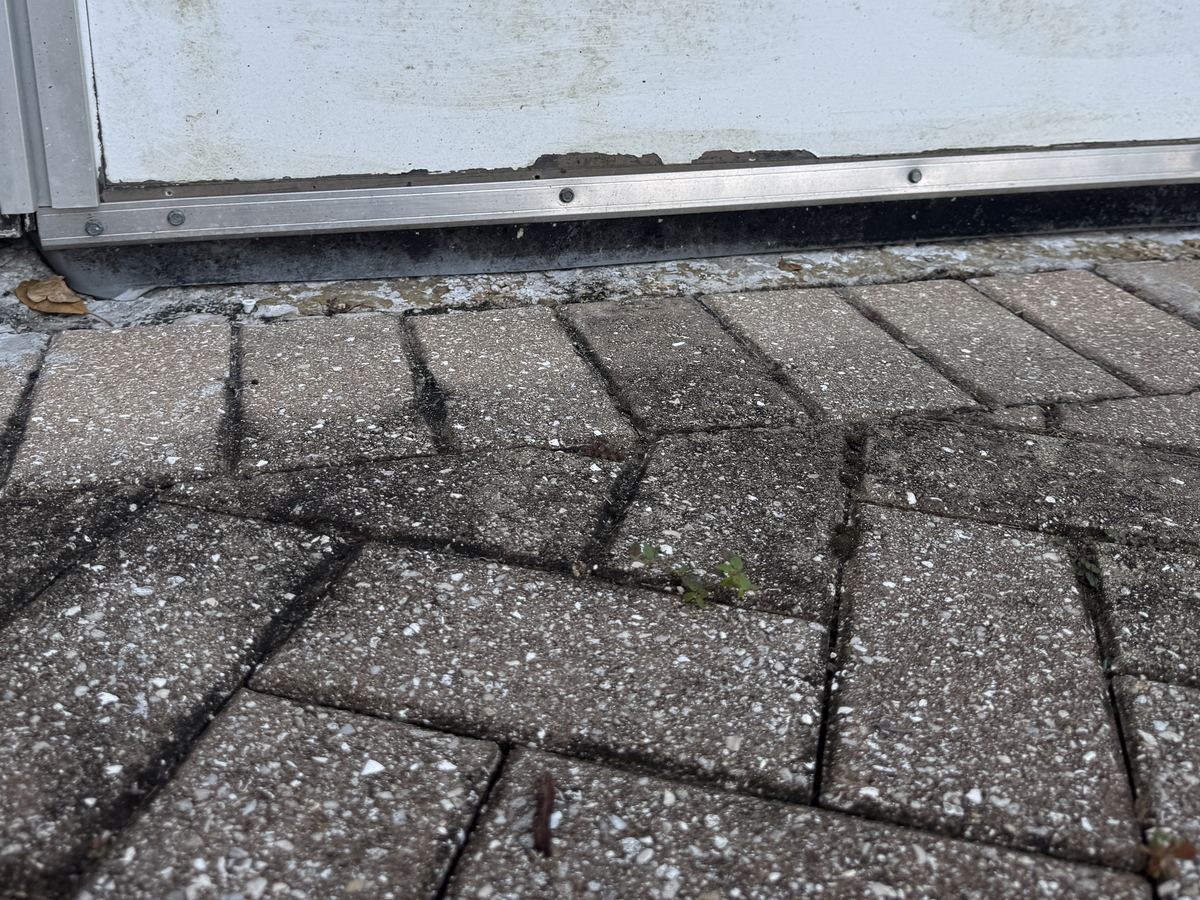 Before
Door sweep: the bottom seal is worn down and there is a gap under the door. If light shows through, a mouse can too.
Related spots
Mice that use this gap often use these too. Check them on the same walk.
When in doubt, seal em out.